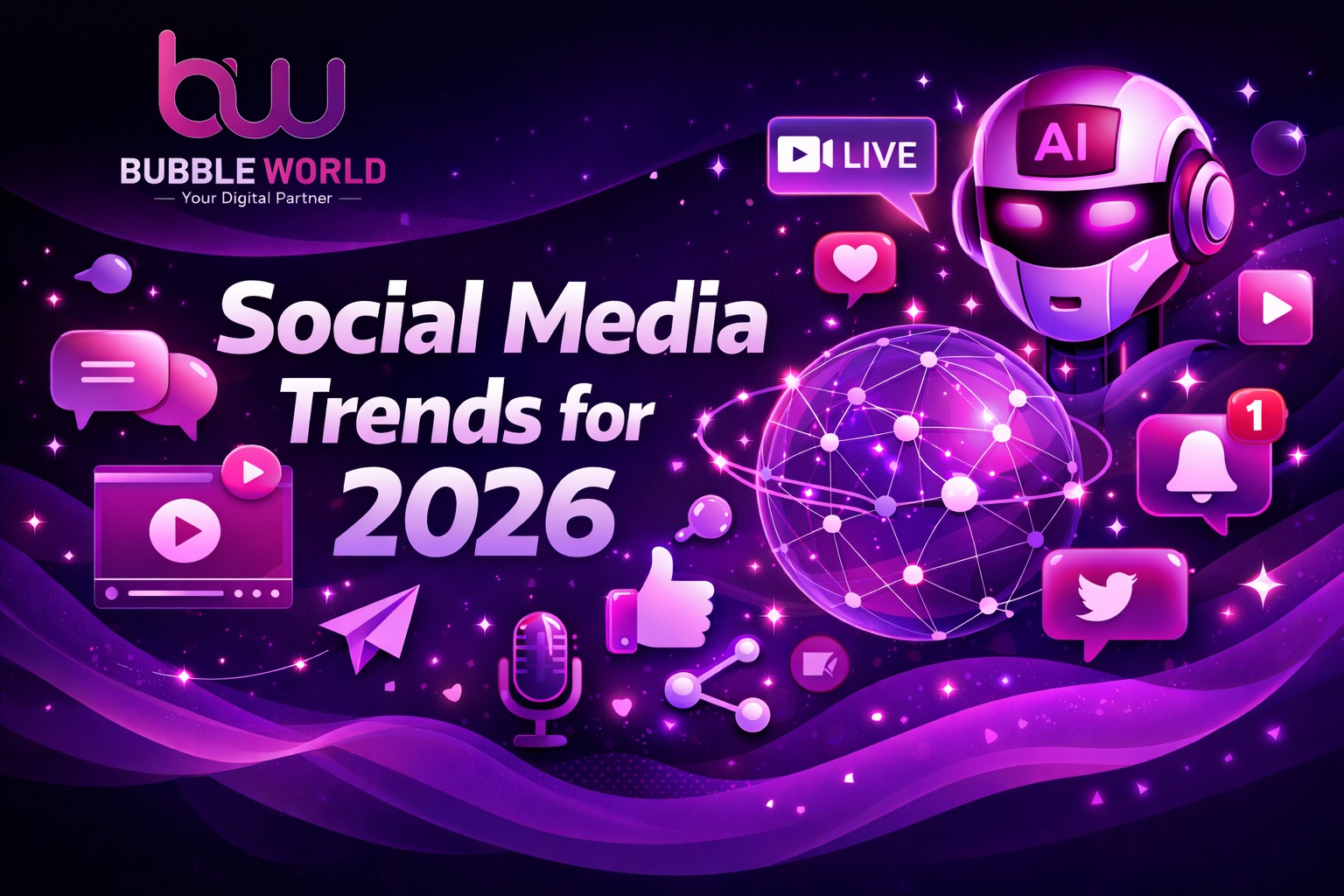
Social Media Trends for 2026: How Businesses Must Adapt to Stay Relevant
The use of social media is no longer an additional method of marketing. Social media has rather impacted the manner in which people interact, buy products, discover products or brands, and gain access to information. With new advancements in technology being witnessed every day, it is important for businesses to gear up for the future of the digital world that would be powered by AI-rich content, driven by video content, and focusing on authenticity.
Algorithms are constantly developing, behaviors are changing, and the rivalry to be seen is greater than ever before. For the long-term sustainability and competitiveness of brands, it is the need of the hour to stay updated with the latest trends, leverage the latest tools, and connect with the audience. Let’s take a glance at the most prominent trends in the realm of social media in the year 2026.
Why Social Media Trends Matter (SEO + Business Perspective)
Search engines favor content that is related to the interests of the users and trending content. If your social strategy is in line with what is trending, like video, AI, and social commerce, you can enjoy the fruits of both social and optimized search engine results.
User behaviors evolve very quickly. Attention spans shrink, authentic content is in more demand, and people are very concerned about the element of community and experience. The role of user content in search intent has now been directly influenced by the presence of social media.
However, on a different dimension, the algorithms on platforms such as Instagram, TikTok, YouTube, and others tend to prefer or focus on formats and behaviors perceived as contemporary and highly engaging, such as short-form videos and other forms of interactivity. Needless to say, brands which are leaders in such tendencies enjoy higher visibility.
Key Social Media Trends for 2026 & How Businesses Should Adapt
- Content Strategies using Generative AI
- Content creation, scheduling, analysis, and optimization tools using artificial intelligence are now common.
- Use good AI tools and train staff on their use
- Apply AI to generative thought, draft creation, split-testing, and analysis—but involve the human element regarding brand voice and authenticity.
- Monitor performance and adjust content in light of insights
- Suggestions and recommendations can only be time-effective if the
- Ethical behavior: be transparent about processes: no deepfakes or intellectual property violations
2. Short-Form Video Dominance (With Long-Form Still Relevant)
Short-form videos: Reels, Shorts, and TikTok continue to dominate as attention spans shrink.
- Maintain a healthy balance between short-form and long-form video
- Repurpose long-form content into multiple short clips
- Follow platform-specific requirements for aspect ratios, captions, and thumbnails
3. Social Commerce & Influencer-Driven Discovery
Users increasingly prefer to discover and buy products directly on social platforms.
- Optimize product catalogs for social shopping features.
- Create influencer relationships in support of brand objectives.
- Share user-generated content to show social proof and build trust.
- Track the complete customer journey-from discovery to post-purchase engagement.
4. Social Listening, Real-Time Trends & Micro-Virality
Sustainable growth comes from micro-virality rather than chasing mass virality.
- Use social listening tools to track mentions, competitors, and emerging trends
- Keep content workflows flexible for quick responses
- Focus on relevance and quality over volume
- Regularly review insights and adjust strategies accordingly
5. Brand Authenticity & Cultural Awareness
Modern consumers value transparency, inclusivity, and cultural relevance.
- Share behind-the-scenes moments and real brand stories
- Avoid forced trend-hopping or tone-deaf messaging
- Collaborate with micro-influencers who genuinely connect with your audience
6. Community-Driven Social Media
Communities drive deeper engagement and long-term loyalty.
- Participate in groups, chatrooms, and forums
- Encourage interaction through polls, quizzes, and live sessions
- Prioritize conversations over one-way broadcasting
Putting It All Together: Strategy & Implementation
1. Audit Your Current Social Presence
Review platforms, content formats, engagement rates, reach, and conversions.
2. Define Clear Goals & KPIs
Focus on meaningful metrics such as conversions, sales, and community growth—not just likes or followers.
3. Build a Flexible Workflow
Create a content calendar that balances planned campaigns with trend-responsive content.
4. Invest in the Right Tools
Adopt AI-powered content tools, social listening platforms, analytics dashboards, and social commerce integrations.
5. Train Teams & Encourage Experimentation
Educate teams on brand voice, cultural sensitivity, and trend awareness. Encourage testing, learning, and iteration.
6. Review & Optimize Regularly
Analyze performance weekly or monthly to refine strategies and double down on what works.
Conclusion
In 2026, it’s not about being on social media. It’s about doing social media differently. Companies that do social media differently, by being responsible in AI, and by having commerce and community and trust and relevance in their strategies, will succeed.
This is especially true in the case of businesses which fail to adopt the new strategies. They could end up getting less and less returns on investments, while the other businesses which opt for adaptability will experience greater visibility and returns on investments.
BubbleWorld Digital Marketing Company is here to help you stay ahead of current and future trends on social media. Contact BubbleWorld today to protect your online social media future.